What it is
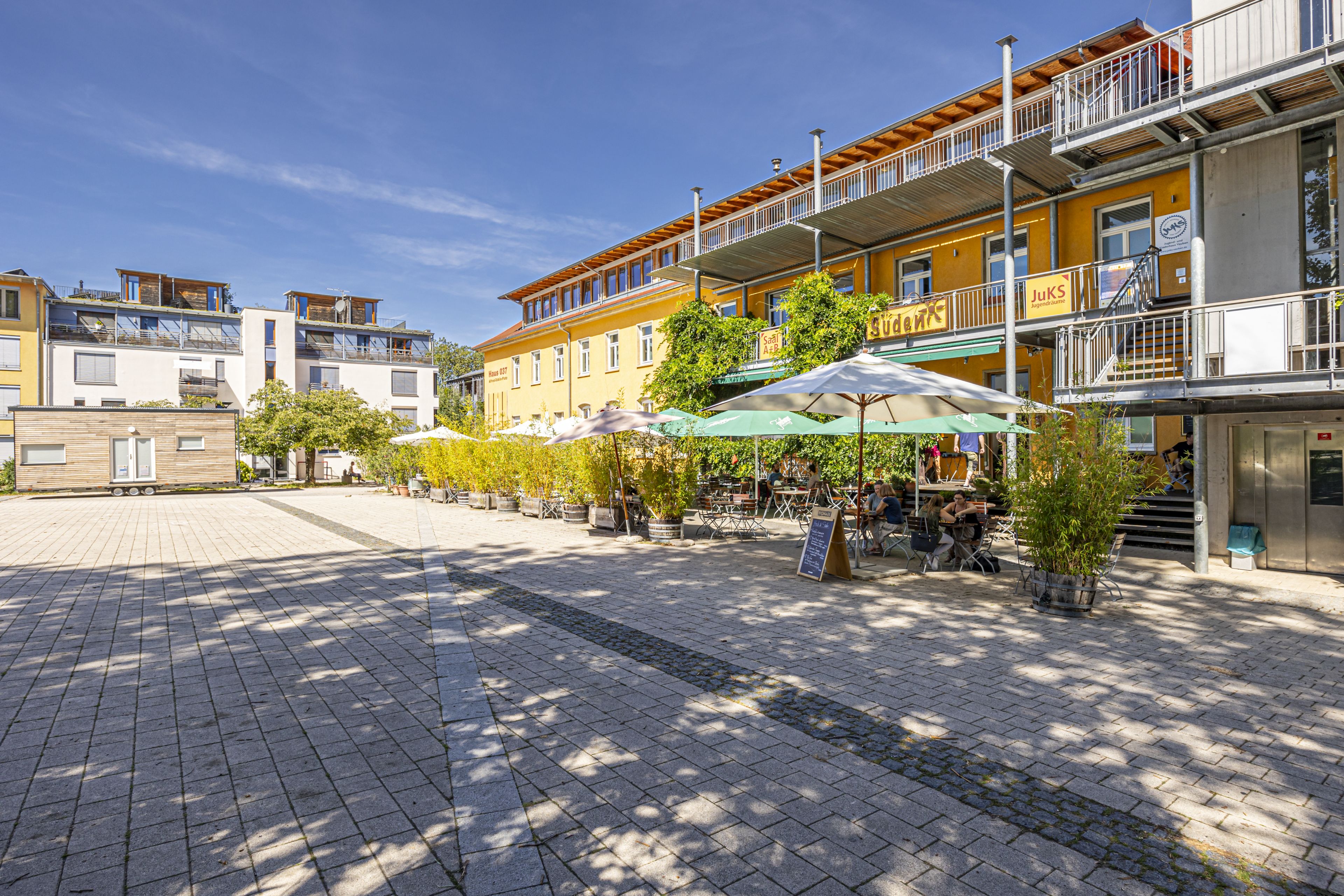
Vauban grew from a former French military barracks site in Freiburg into a dense residential district of roughly 5,500 people. The city identifies citizen engagement, group building and environmentally conscious living as core features of the neighbourhood.
The project matters because its environmental performance is not concentrated in one landmark building. Low-energy standards, passive and plus-energy buildings, tram access, traffic-calmed streets, shared green areas and local social infrastructure operate at district scale.
How it works
- Mobility: Vauban is car-reduced rather than completely car-free; many residential streets have no public parking and private cars are concentrated in district garages.
- Transit: tram service and cycling/walking networks make daily mobility possible without requiring a private car for every trip.
- Energy: low-energy construction was mandatory, with passive houses, plus-energy buildings, solar systems and district heat layered onto the plan.
- Landscape: mature trees, green spaces, green roofs and rainwater retention were integrated with dense housing.
- Mixed life: schools, childcare, community space, shops, workplaces and public space shorten distances between ordinary activities.
Community / operating model
Citizen participation is not a decorative footnote in Vauban’s history. Forum Vauban was founded in 1994, and resident organisations pushed environmental and social issues into the planning process.
Building groups and cooperative housing were prioritised alongside conventional development. The city’s English information material also highlights the self-managed House 037 community centre as a social and cultural hub created through resident persistence.
What can be copied
- Coordinate housing, transport, energy and social infrastructure at neighbourhood scale rather than asking each building to solve sustainability alone.
- Separate car ownership from parking directly in front of every home.
- Give building groups, cooperatives and resident organisations a real role during planning.
- Build everyday services early enough that short-distance living is practical, not aspirational.
Yogawiser read
Vauban’s strongest lesson is coordination. None of its ingredients is especially mysterious; the unusual part is that mobility, housing, energy and neighbourhood life were allowed to reinforce one another.
Evidence / trade-offs
What makes this difficult to copy?
Vauban is car-reduced, not magically car-free. Its mobility model works with tram and bus access, cycling, nearby services, controlled parking and district garages; remove those supporting conditions and the headline is much harder to reproduce.
Success has also produced ordinary urban tensions. Freiburg reported high rents among residents' concerns in 2025. The district shows what coordinated planning can achieve, but ecological quality does not automatically guarantee long-term affordability.