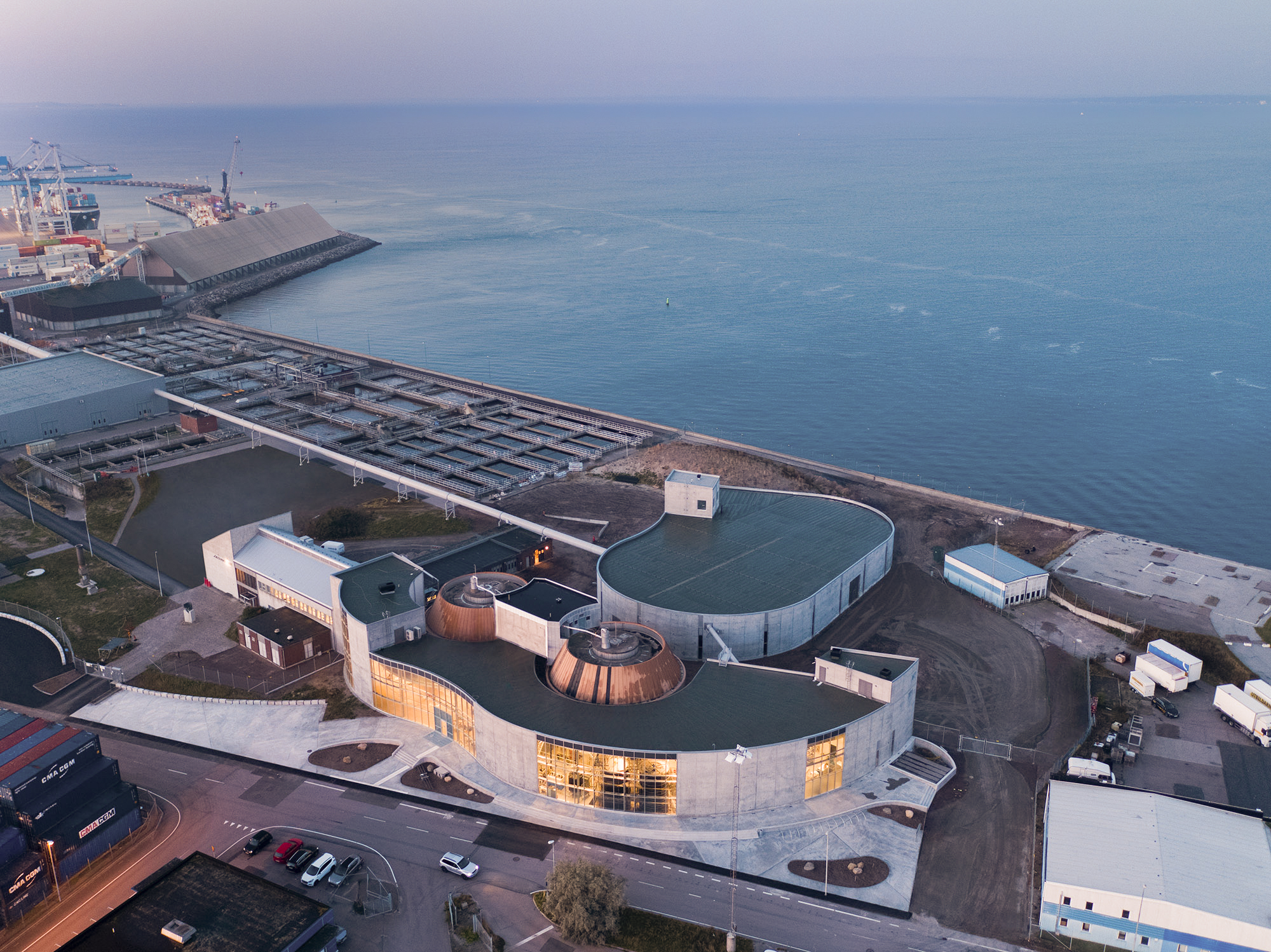
What it is
RecoLab serves Helsingborg’s Oceanhamnen district through a source-separated sanitation system. Instead of sending toilet water, household greywater and food waste into the same diluted stream, the district collects them separately and processes them locally.
That one plumbing decision changes what wastewater can become. Nutrients are easier to recover when they have not been diluted, food waste can contribute to biogas production, and greywater can be treated as a relatively clean water and heat resource.
How it works
- Blackwater: vacuum toilets use very small flush volumes and send concentrated toilet waste through a dedicated pipe.
- Food waste: kitchen grinders send food waste into its own collection stream rather than a conventional bin route.
- Greywater: water from showers, washing and kitchens travels separately for treatment, reuse and heat recovery.
- Nutrients: nitrogen and phosphorus can be recovered in cleaner, more useful forms than in conventional mixed sewage.
- Learning: RecoLab is also a test bed and public learning environment for water, waste, energy and recycling.
Community / operating model
RecoLab is a useful reminder that residents are part of infrastructure. The system changes ordinary domestic behaviour through vacuum toilets, food-waste grinders and different plumbing.
Project teams have used recurring meetings to strengthen residents’ understanding of the system, because a source-separated network can only perform if the people connected to it know what belongs in each stream.
The operating partnership is also deliberately cross-sector: water, waste, energy and city planning sit around the same table.
What can be copied
- Separate resource streams before they become too diluted or contaminated to recover economically.
- Design resident interfaces—such as toilets and food-waste systems—as carefully as treatment technology.
- Put water, waste and energy utilities into one project structure when the resource loops cross institutional boundaries.
- Use new districts as full-scale test beds for infrastructure that would be harder to retrofit later.
Yogawiser read
RecoLab changes the meaning of sewage with three pipes. The waste was never one substance; conventional plumbing only made it look that way.
Evidence / trade-offs
What makes this difficult to copy?
Source separation moves complexity upstream into buildings and everyday behaviour. Helsingborg reports that food-waste grinders can clog when used incorrectly and that poorly installed vacuum toilets can become a noise nuisance; communication with residents and contractors became a key lesson.
Three separate pipe networks are easiest to build into a new district. Retrofitting the same logic into existing streets and buildings means additional plumbing, capital and user adaptation, so the resource gains have to justify a more complex infrastructure stack.