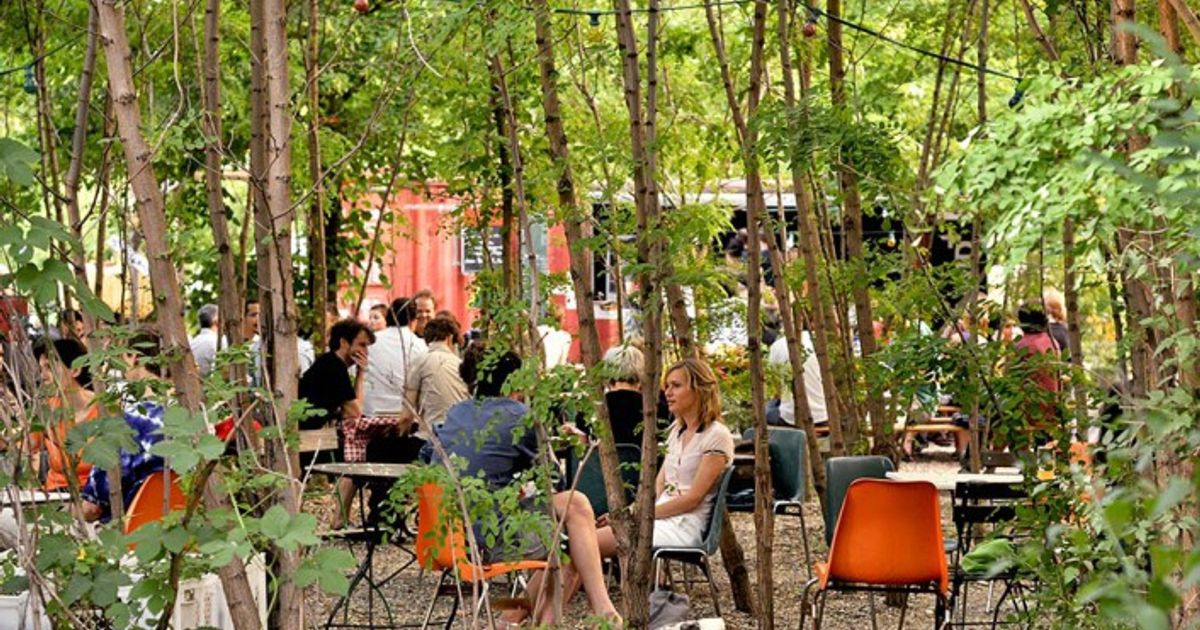
What it is
Prinzessinnengarten began in 2009 on a long-unused site at Moritzplatz in Kreuzberg. After ten years, the project relocated; since 2020 Prinzessinnengarten Kollektiv Berlin has been based on the grounds of the Neuer St. Jacobi cemetery in Neukölln.
The current site combines communal gardening, biodiversity work, environmental education, workshops, café activity and preservation of a large public green space.
How it works
- Shared cultivation: there are no private beds; participants contribute to a common garden.
- Learning by doing: workshops and open gardening cover cultivation, seed work, biodiversity, urban ecology, climate adaptation and recycling.
- Mobile logic: raised beds and adaptable infrastructure allowed the project to survive a major move rather than being tied to one parcel.
- Mixed economy: café, plant sales, workshops, tours and educational work support the wider social project.
Community / operating model
Nomadisch Grün gGmbH is the responsible non-profit organisation. The garden is designed around participation rather than allotment ownership.
The Neukölln site invites people of different ages to join open gardening days and workshops while operating a garden café and educational activities. The older Moritzplatz site also continues as an inclusive community garden under a different organisation.
What can be copied
- Design community infrastructure so it can move when land tenure is uncertain.
- Avoid private micro-territories when the goal is collective stewardship and knowledge exchange.
- Let food production, education, café activity and biodiversity support one another.
- Treat temporary use as a durable social institution even when the physical site changes.
Yogawiser read
The project’s most transferable lesson may be its refusal to confuse permanence with success. A garden can move; a network of skills, habits and relationships is harder to displace.
Evidence / trade-offs
What makes this difficult to copy?
Temporary use created freedom, but also insecurity. The original Moritzplatz garden was deliberately mobile because the land could be privatised; after ten years the collective moved to the New St. Jacobi Cemetery in Neukölln.
Community gardens can improve a neighbourhood while remaining vulnerable to the land-value pressures they help make visible. Copying the garden therefore requires a tenure strategy as much as raised beds, workshops or compost.