What it is
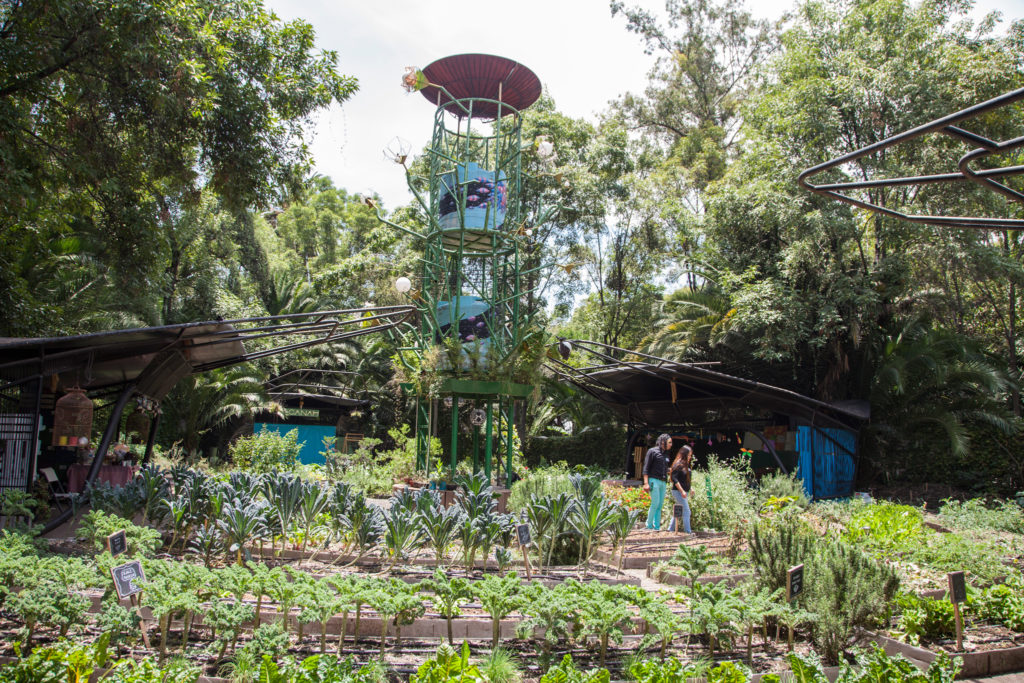
Huerto Roma Verde occupies land in Roma Sur that was left vacant after the 1985 Mexico City earthquake. In 2012, La Cuadra A.C. and neighbours began transforming the site into a community garden and what the organisation now calls a biosocial laboratory.
The site combines permaculture, an agroecological market, regenerative food, workshops, culture, waste processing and community resilience. During the 2017 earthquake it became a major support centre, making the garden function as emergency infrastructure as well as green space.
How it works
- Food: cultivation, regenerative cuisine and the Campo Urbano agroecological market connect local production and urban consumers.
- Waste: the organisation reports processing more than twenty tonnes per month across more than twenty categories of material.
- Culture: workshops, festivals, film, learning and public events keep the site socially active beyond gardening.
- Resilience: emergency response during the 2017 earthquake and COVID-19 turned an ecological project into neighbourhood support infrastructure.
- Organisation: La Cuadra A.C. coordinates permanent staff, partner projects, interns, volunteers and temporary collaborators.
Community / operating model
Huerto Roma Verde explicitly describes itself as a community centre and biosocial resilience laboratory rather than simply an urban farm.
The official site describes a team of more than eighty people across permanent collaborators, associated projects, interns, volunteers and temporary collaborative work.
Its citizen-platform model connects people and initiatives through mutual support, producing services and activities intended to be socially and environmentally useful both inside and outside the site.
What can be copied
- Design green space so it can switch roles during emergencies instead of serving only normal-day programming.
- Put markets, waste systems, education and culture on the same site so different communities have reasons to participate.
- Use a non-profit organisational layer to hold temporary volunteers and long-term programmes together.
- Treat ecological regeneration and social resilience as one problem.
Yogawiser read
Huerto Roma Verde is interesting because the garden is almost the least important thing about the garden. What was really grown there was civic capacity.
Evidence / trade-offs
What makes this difficult to copy?
Huerto Roma Verde grew through civic appropriation of land left vacant after the 1985 earthquake, inside a neighbourhood undergoing rapid gentrification. That history matters: the project's social value is inseparable from contested questions of who gets to shape and remain in valuable urban space.
A garden can build resilience without controlling the wider property market around it. The more portable lesson is the organisational capacity—volunteers, waste handling, markets, culture and emergency response—not the assumption that a successful community space will automatically be secure.